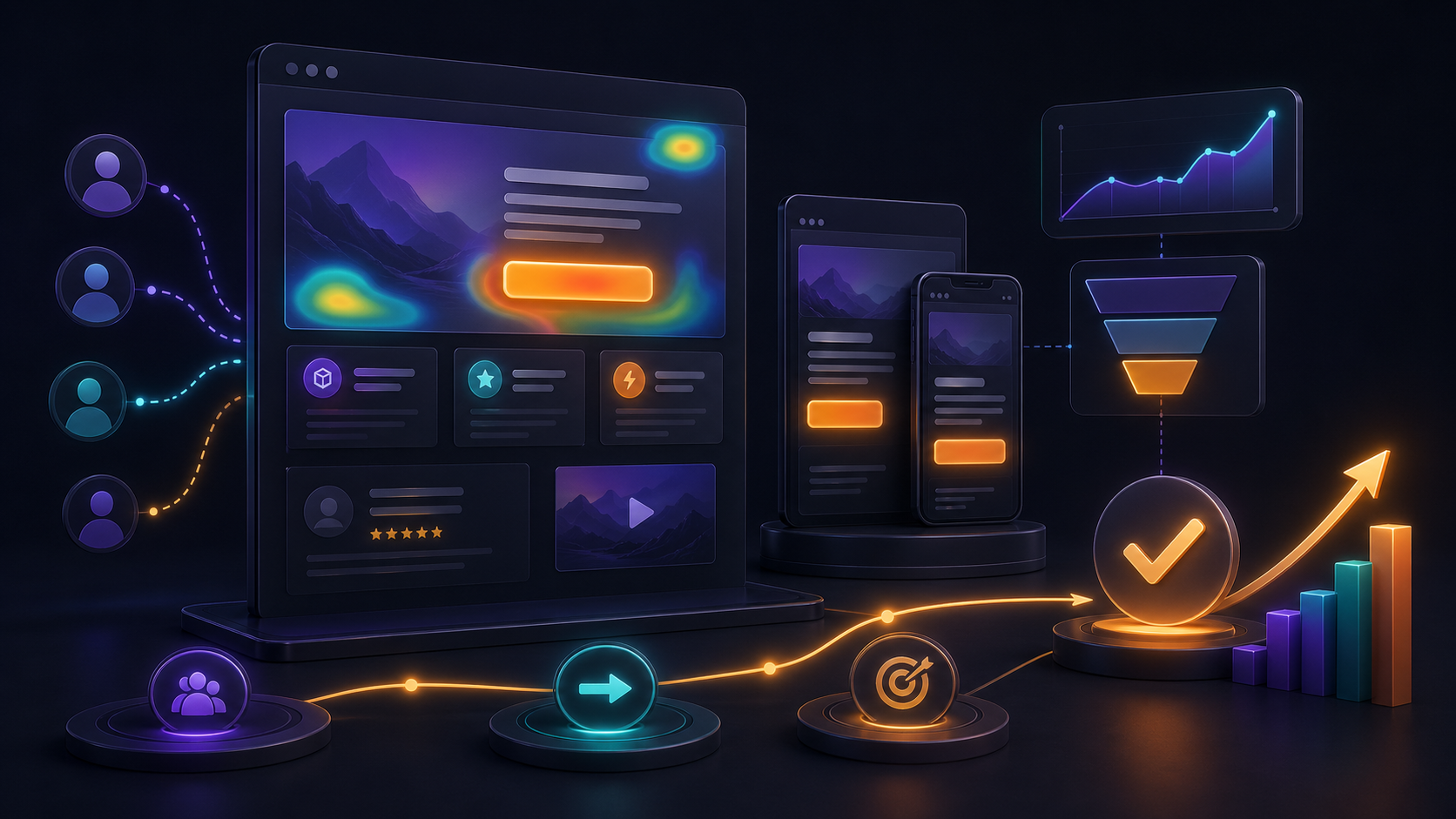
Traffic is only useful if the page gives visitors a reason to act. A landing page can rank well and still fail if the message is vague, the proof is weak, or the call to action is buried.
For service websites, conversion strategy starts with structure.
Lead with the outcome
The hero section should explain what the service helps the visitor achieve. Avoid clever headlines that hide the offer. Clear beats clever when someone is deciding whether to contact you.
Explain the problem
Visitors need to feel understood before they trust the solution. Describe the pain points your service solves, whether that is slow websites, poor CMS editing, weak SEO visibility, or messy design implementation.
Show proof
Case studies, before-and-after examples, testimonials, metrics, and screenshots all reduce risk. A visitor is asking, "Can this person actually do it?" Proof answers that question.
Make the CTA obvious
Every service landing page should have a primary action. Book a call, request a quote, start a project, or send a message. Pick one and repeat it in logical places.
A strong landing page balances SEO content with buyer psychology. It ranks because it is useful, and it converts because it is clear.
A conversion-focused landing page needs more than a nice hero section. Here is how to structure service pages that rank, build trust, and turn visitors into leads.
- Abdullah Sajid

Leave a comment